EN | SI
THE SOWER
1931 | 2026
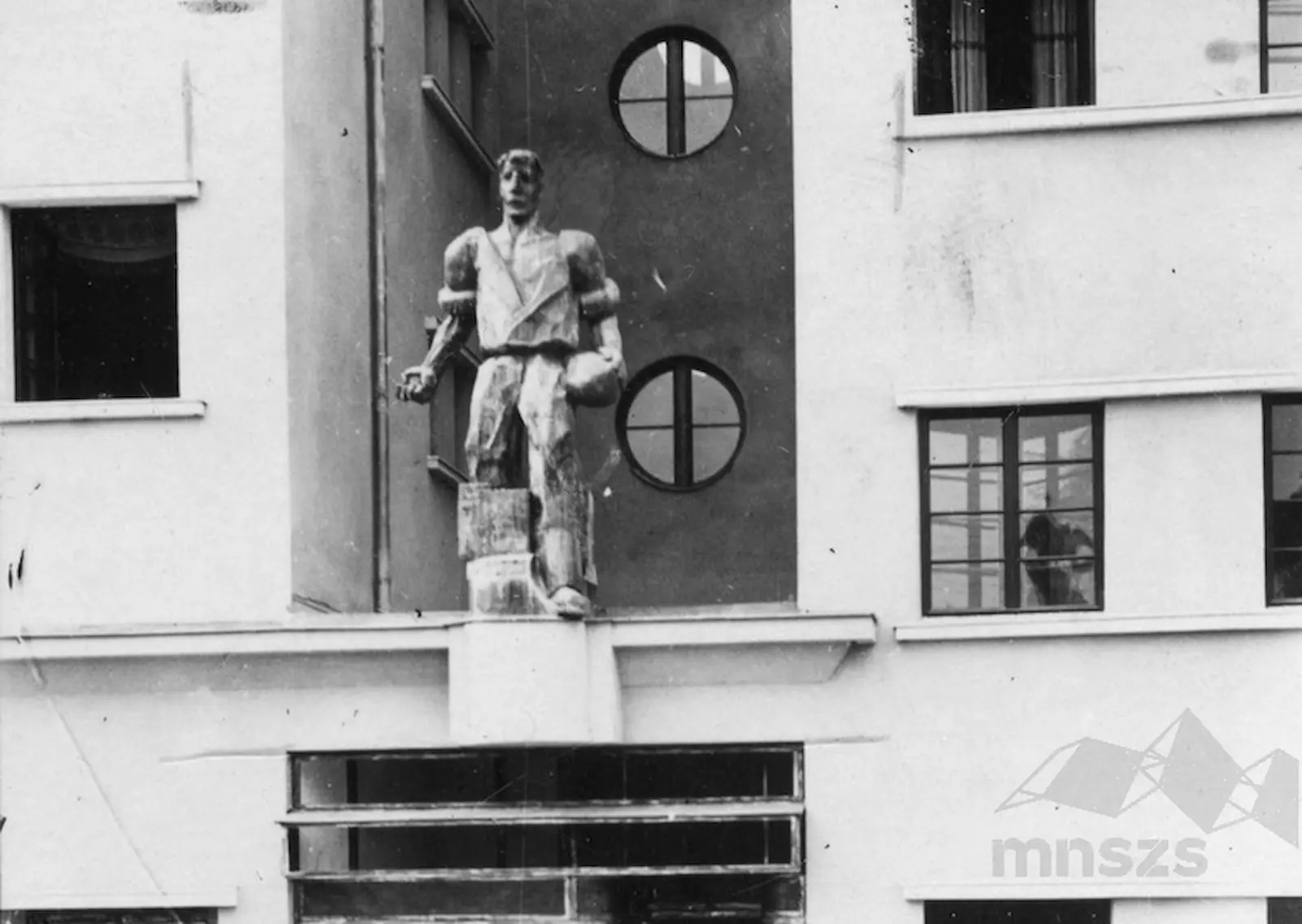
ORIGINAL SCULPTURE
FRANCE KRALJ | 1931
hammered copper, wood
RECONSTRUCTION
D. DRAŽETIĆ, D. VUČKO | 2026
bronze
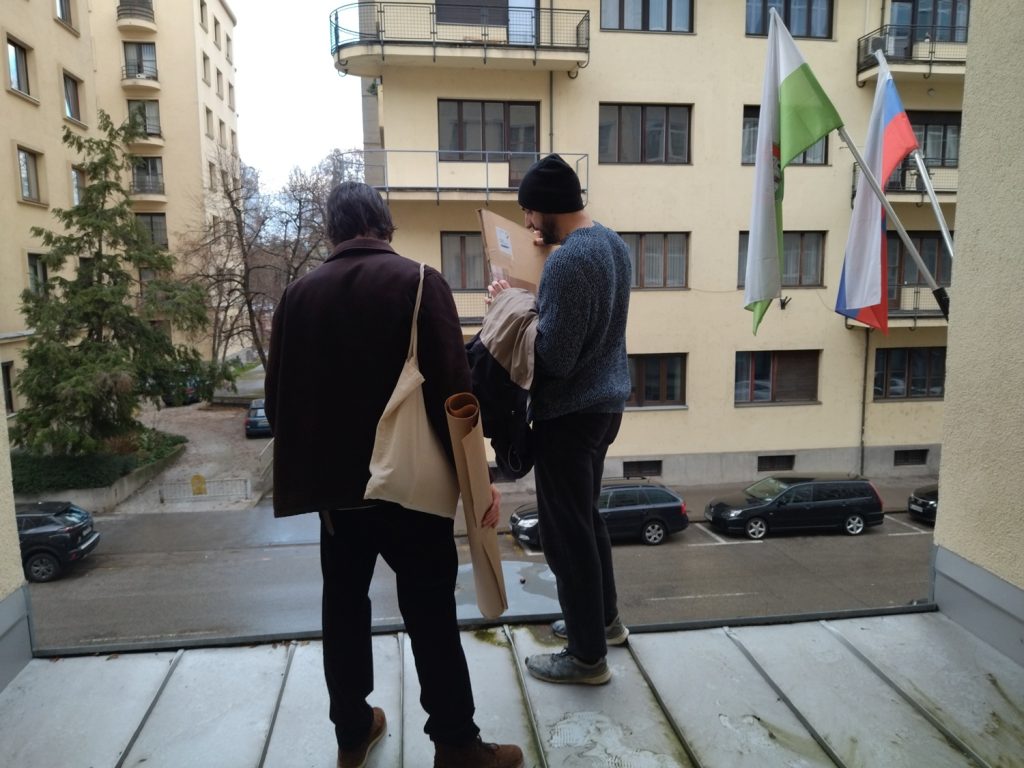
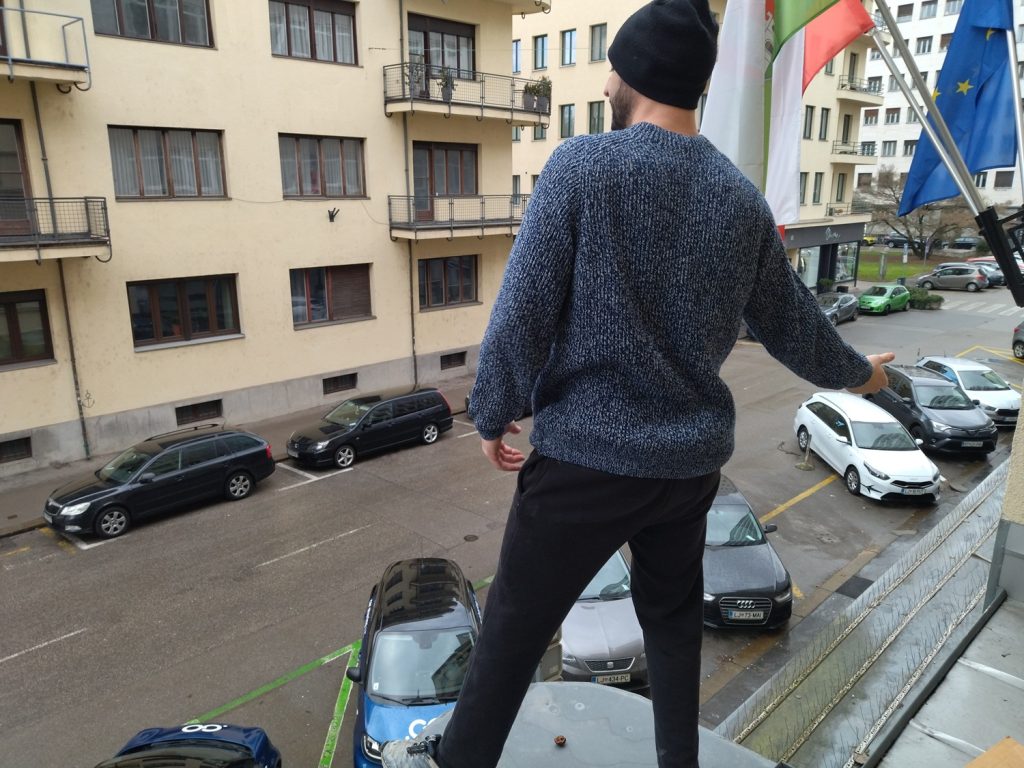
When the building of the Savings and Loan Consortium of State Employees was officially opened in October 1931 on Gajeva Street – today’s Štefanova ulica in Ljubljana – a 3.7-metre statue of The Sower stood on it. The predominantly residential building also housed the consortium’s offices on its lower floors.
The sculpture was created by the painter and sculptor France Kralj, one of the leading figures of Slovenian Expressionism.
Placed on the façade, The Sower embodied the idea of investment and future growth, visually articulating the proverb: “As you sow, so shall you reap.”
The statue remained on the building for less than a decade. Soon after its disappearance came the Second World War, the occupation of Ljubljana, and the post-war reconstruction of the country. Within these historical circumstances, the statue gradually receded from public memory.
It was not until many decades later, in 2013, that the idea of reinstalling the statue first emerged.
WHAT HAPPENED TO THE ORIGINAL STATUE
Research continued over several years. Information about the statue’s height (3.7 metres) and the materials used (hammered copper and wood) was found in professional literature and newspaper articles.
The circumstances of its fate, however, remained unclear. No answers were found in newspaper reports, professional literature, or archival sources. Elderly residents of the building were likewise unable to provide useful information. Incorrect interpretations and rumours circulated, including the claim that the statue had been melted down by the Italians during the occupation in the Second World War.
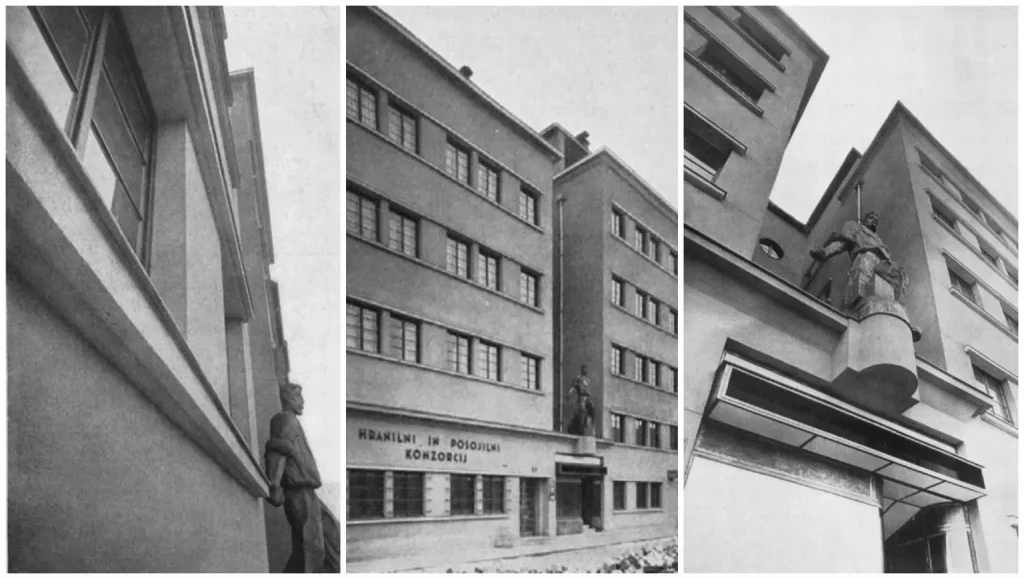
Photographs of the statue were discovered in the Museum of Contemporary History of Slovenia, the Ljubljana Historical Archives, and in the journal Arhitektura (1932), which was based in the very building on which the statue stood. These images later proved essential to the reconstruction.
A decisive breakthrough in clarifying the fate of the original statue came through contact with the artist’s son, Zlat Kralj. According to his account, his father had experimented with materials and apparently failed to execute one of the joints properly.
Water penetrated the seam in the copper cladding, the wooden structure gradually decayed, and the statue ultimately fell to the pavement below.
The satirical newspaper Toti list also responded to the statue’s deterioration at the time. A cartoon published under the title “One After Another” was accompanied by the caption:
“What does it mean, Kralj France, that all your art is dying? Last year the first, this year the second of your statues already rests in a coffin.”
Toti list, February 1941
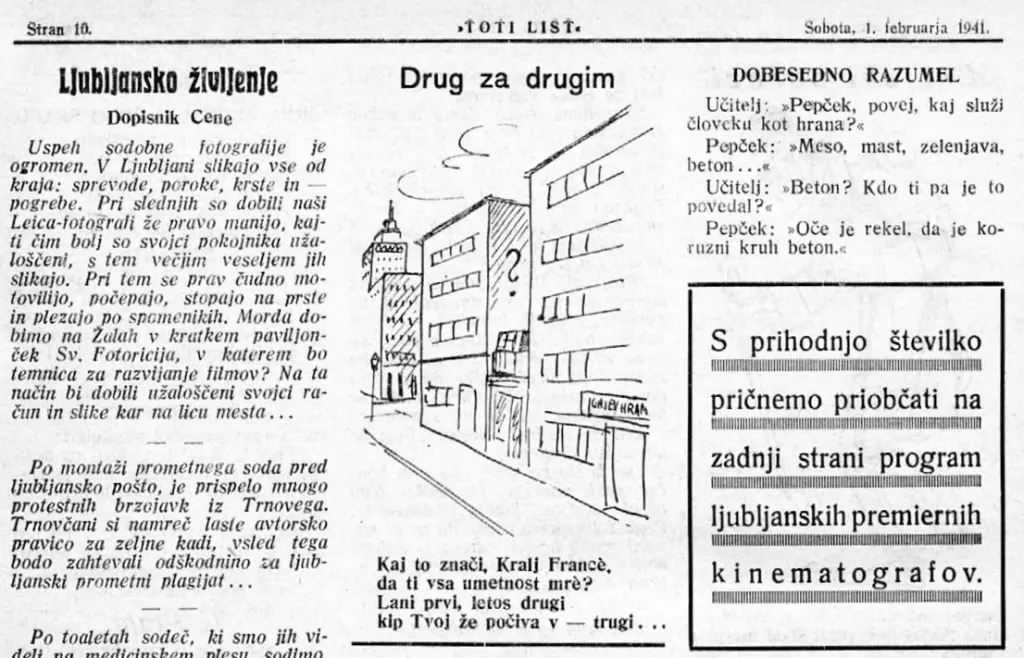
The phrase “Last year the first” refers to Kralj’s sculpture Peasant Woman with Child and Cow (Priroda), which was vandalised in July 1939 following a critical newspaper article published in the daily Jutro. The work was damaged and covered in tar. The verse therefore suggests that The Sower was destroyed a year later, in 1940.
The text in Toti list was published on 1 February 1941, which leaves open the possibility that the statue collapsed in January 1941. The most probable timeframe of its disappearance thus falls between late 1940 and the end of January 1941.
The Sower therefore stood on the building for only nine years.
THE RETURN OF THE SOWER
The idea of reinstating the statue first emerged in 2013. Parallel to the search for information about the original work, the proposal gradually developed into a concrete project.
From 2018 onwards, formal procedures began to take shape: the preparation of applications and initiatives, coordination with the apartment owners, consultations with the Institute for the Protection of Cultural Heritage of Slovenia, and efforts to secure the support of The Commission for Public Monuments and Memorials of the City of Ljubljana.
The Commission endorsed the return of the statue to the building, while the question of funding remained open. At the end of 2022, an agreement was reached under which part of the costs of the reinstallation would be covered by the apartment owners and part by donors, with the assistance of the City of Ljubljana.
The heirs of France Kralj supported and welcomed the return of The Sower to the building.
The execution of the statue was entrusted to two talented young sculptors, Denis Dražetić and Denis Vučko, students at the Academy of Fine Arts and Design (ALUO), under the mentorship of Professor Matjaž Počivavšek. Professor Počivavšek was a committed advocate of the project and contributed significantly to its realisation. In the final phase, Professor Metod Frlic also joined the project as a mentor.
Dražetić and Vučko had previously worked on sculptural reconstructions. Based on archival photographs, they produced, among other works, a replica of The Bather by France Gorše, now once again installed above the entrance to the renovated Ilirija swimming baths. They also created a copy of the statue of Dr Edo Šlajmer by the sculptor Zdenko Kalin in front of the Ljubljana University Medical Centre, as well as a replica of the fountain Phytolites by the sculptor Vojko Štuhec in Maribor.
Initially, the statue was intended to be produced from synthetic materials in order to reduce costs. Over time, however, it became evident that there was no reliable data on the long-term durability of such materials in outdoor conditions. Estimates of their lifespan ranged from fifteen to fifty years; a timeframe considered insufficient for a project of this kind.
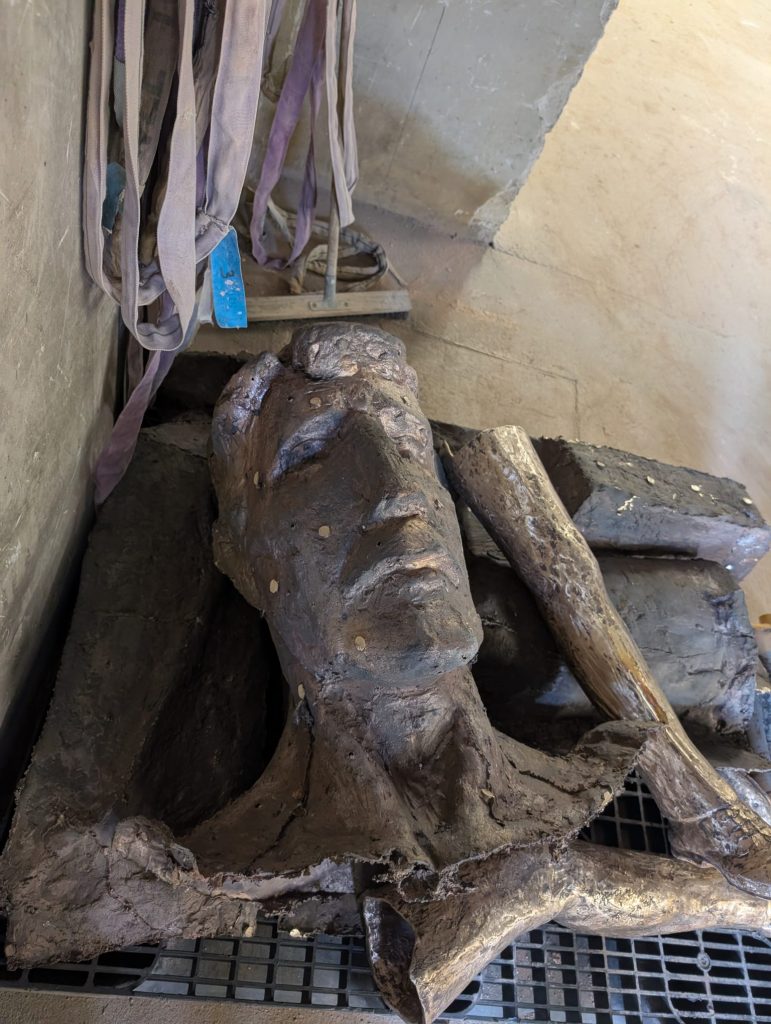
A decision was therefore made to cast the statue in bronze, a substantially more durable material, though also considerably more expensive.
A revised agreement was reached with the Ljubljana Commission for Public Monuments and Memorials and the apartment owners, while important support was provided by the family-run foundry Livartis.
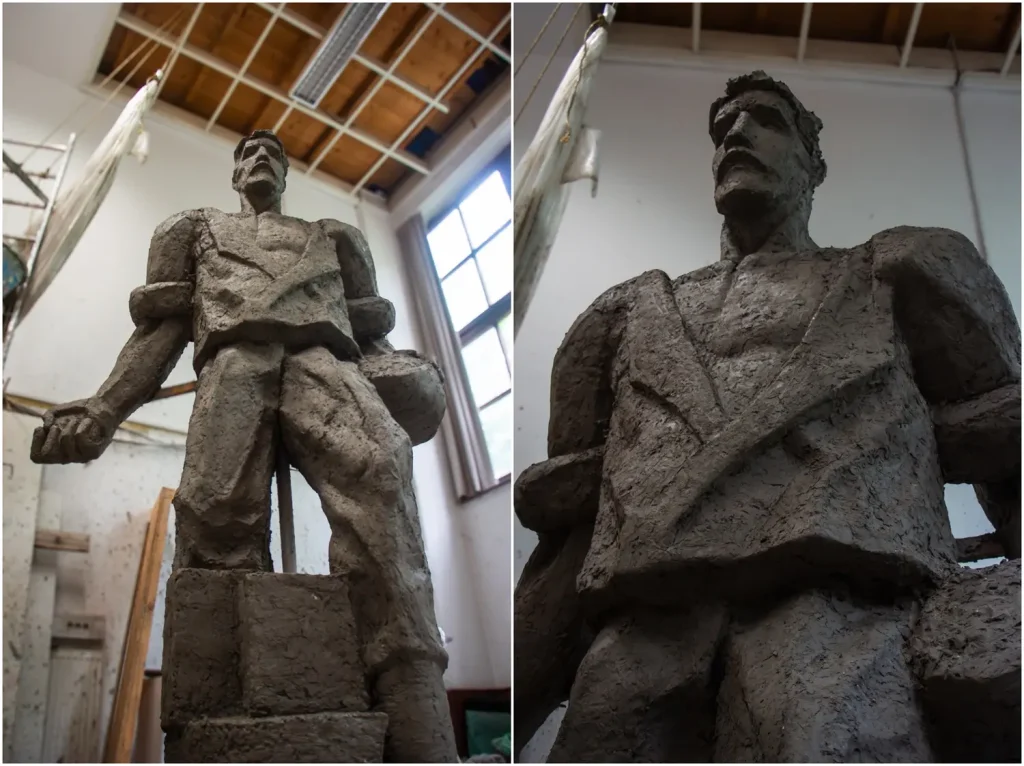
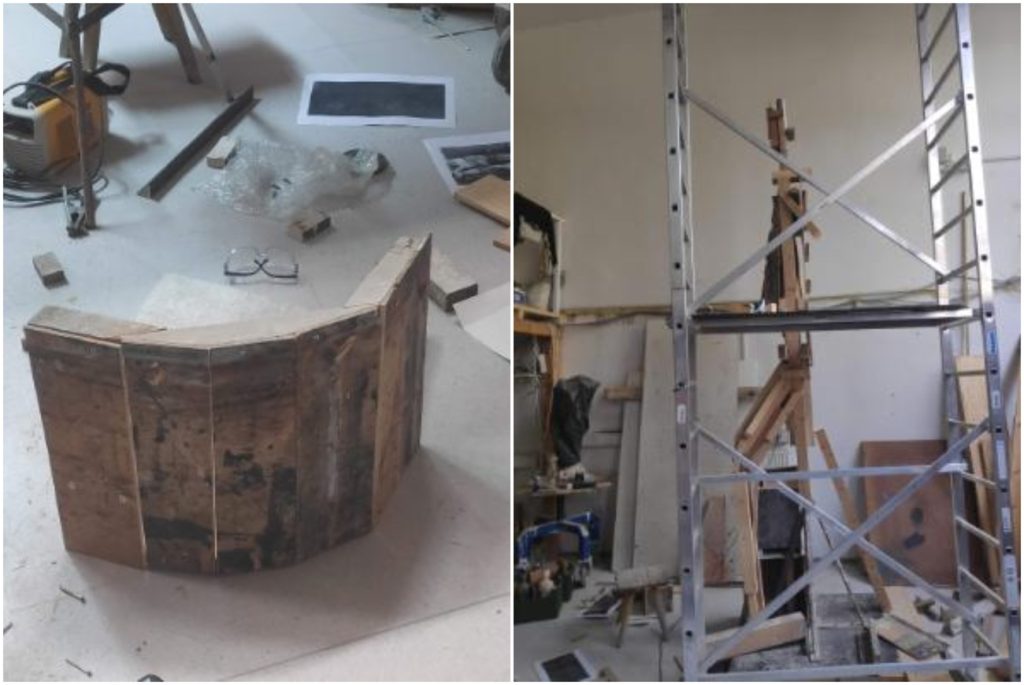
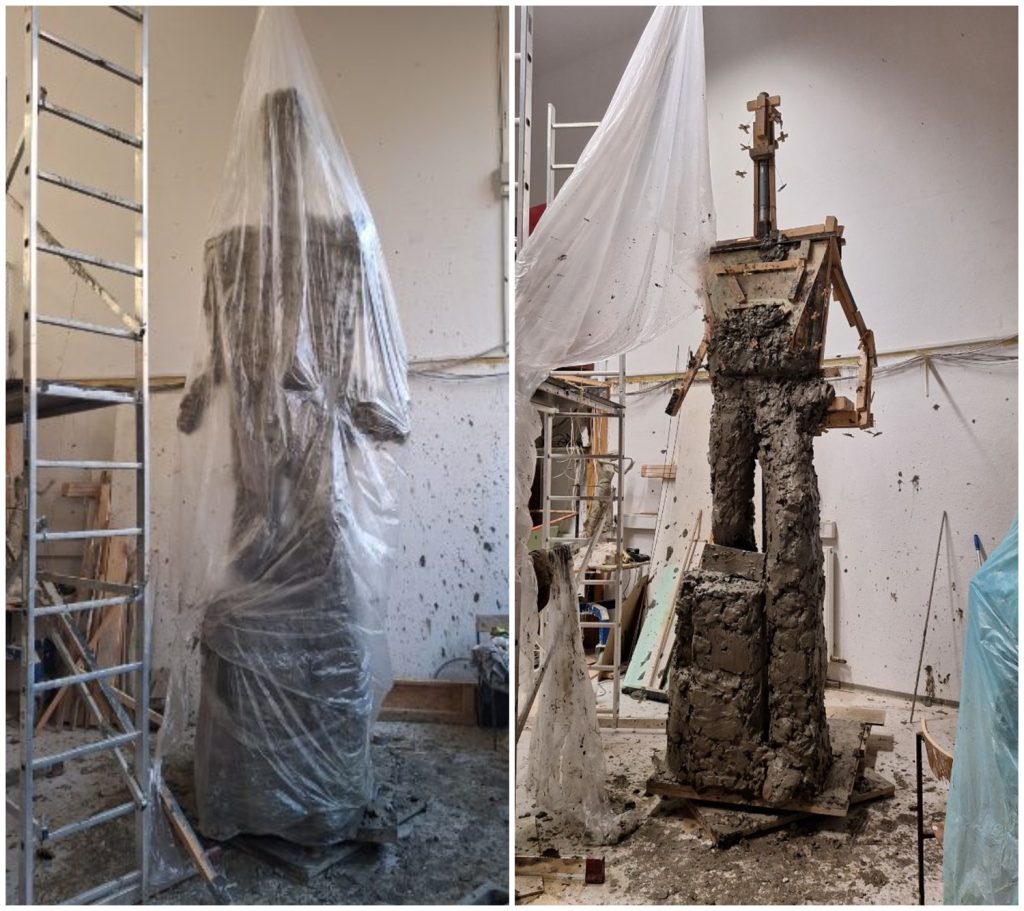
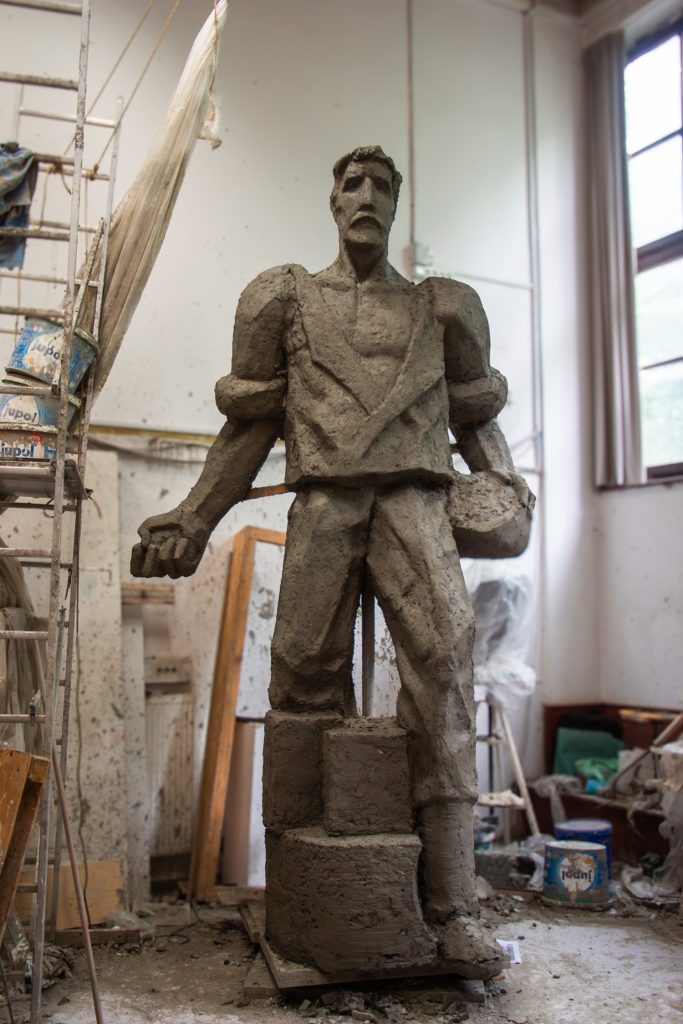
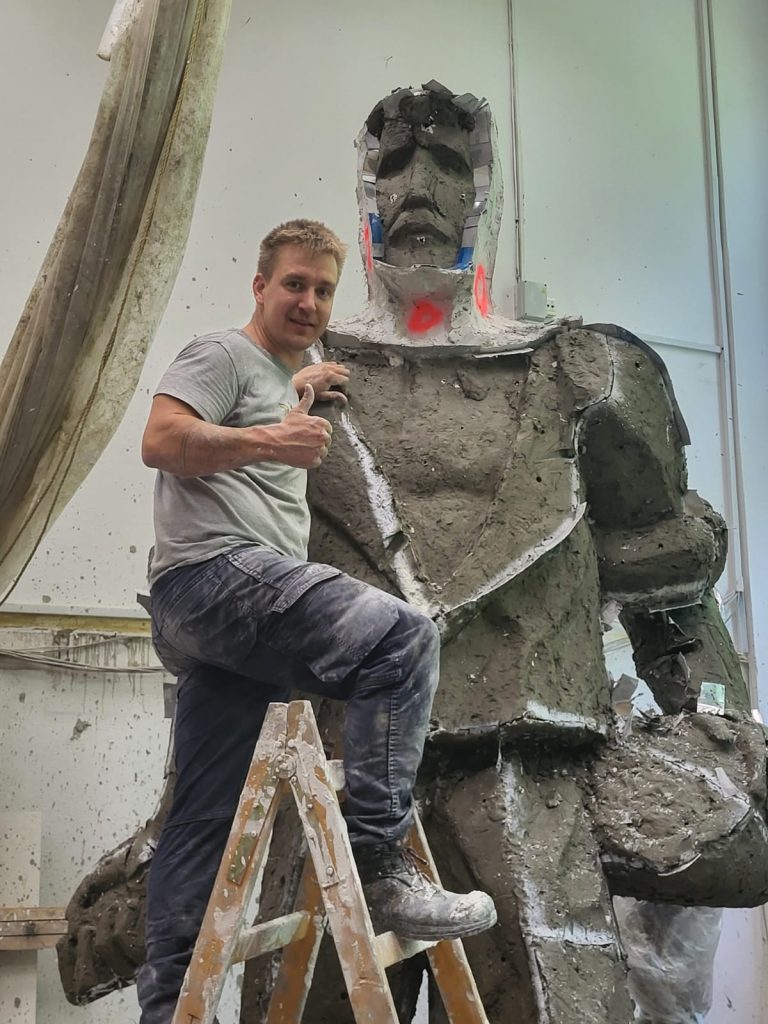
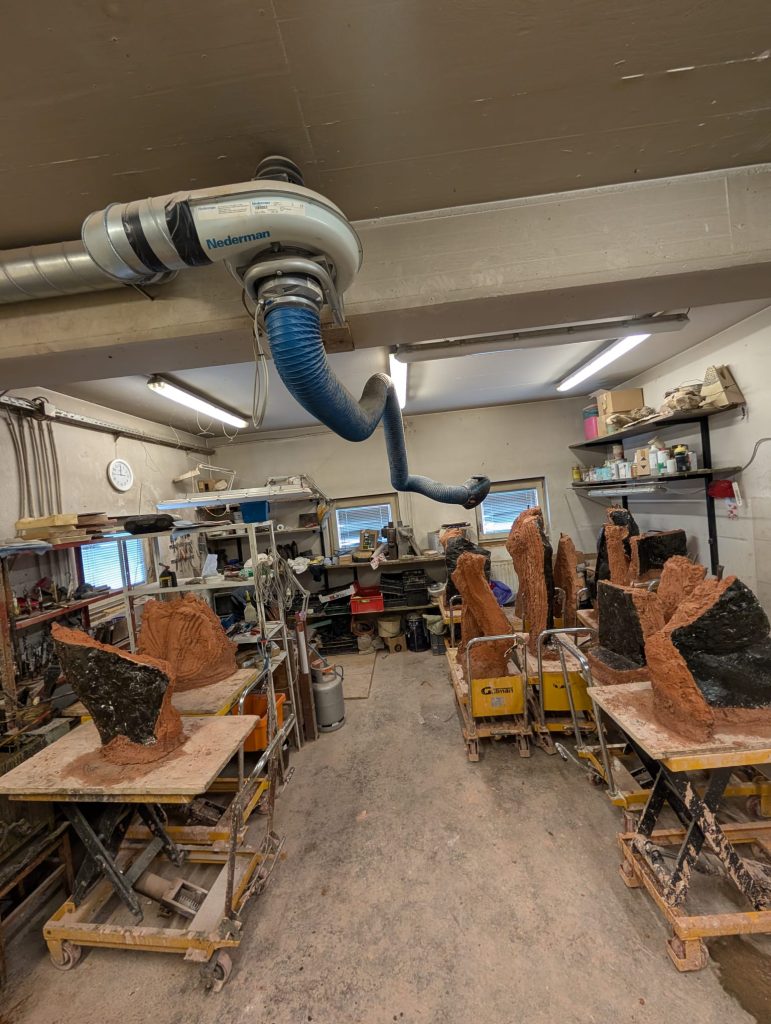
In 2024, Dražetić and Vučko modelled the statue in clay in the studios of the Academy of Fine Arts and Design on Svetčeva Street in Ljubljana, where the ceiling height made it possible to produce a figure measuring 3.7 metres.
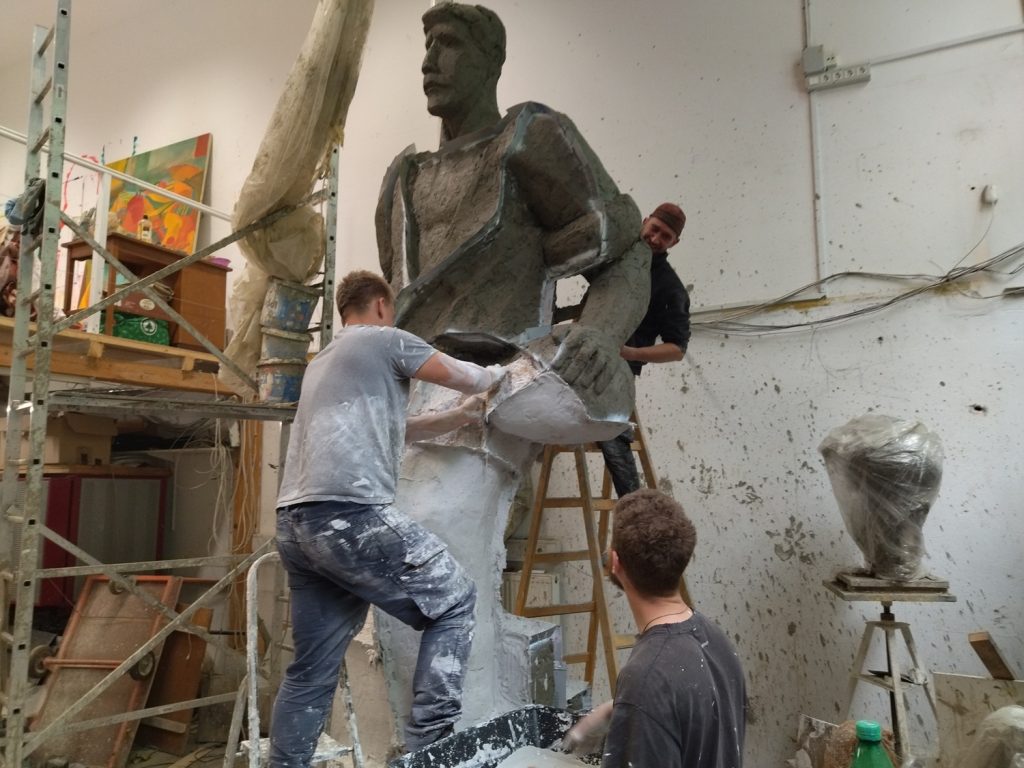
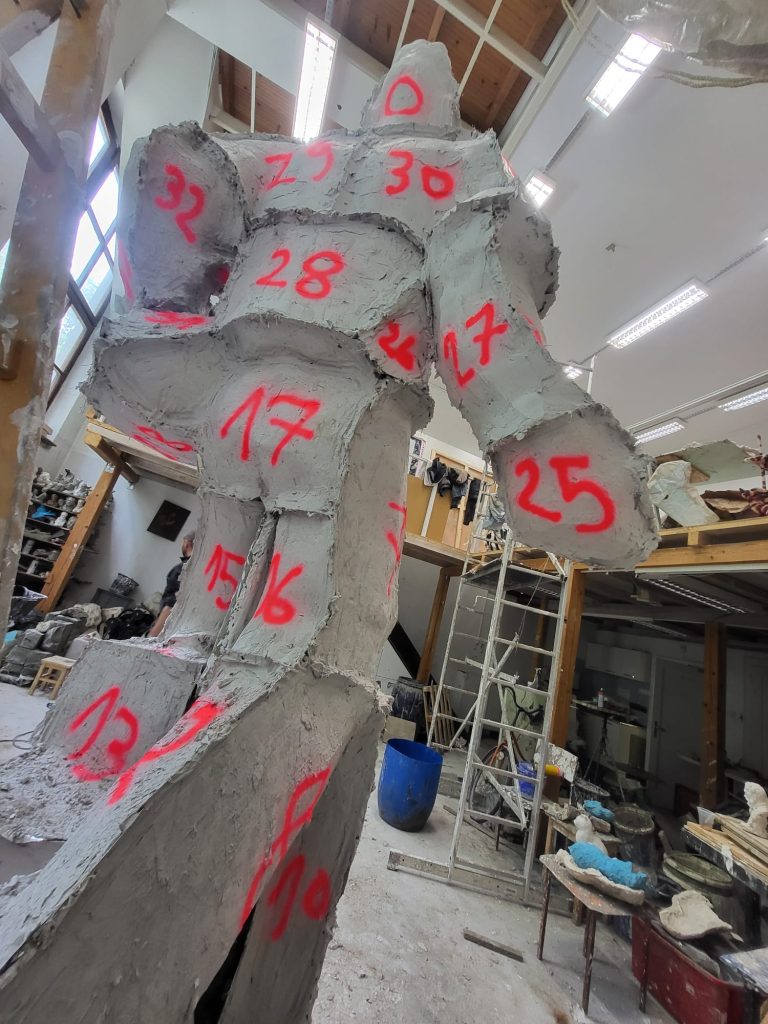
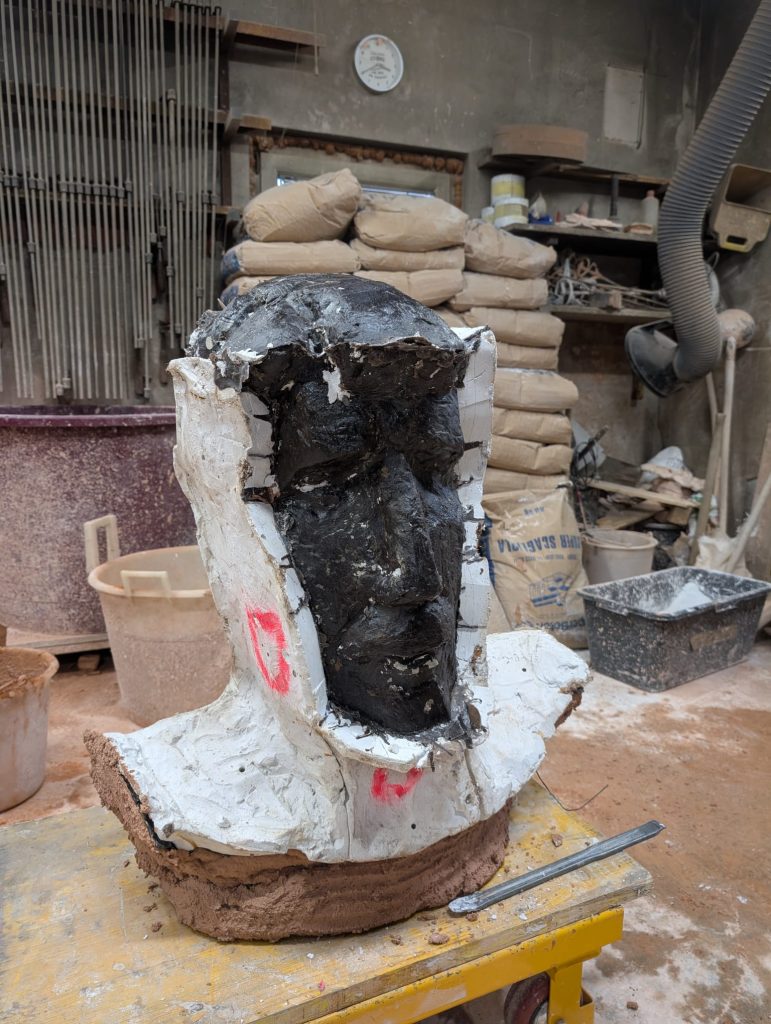
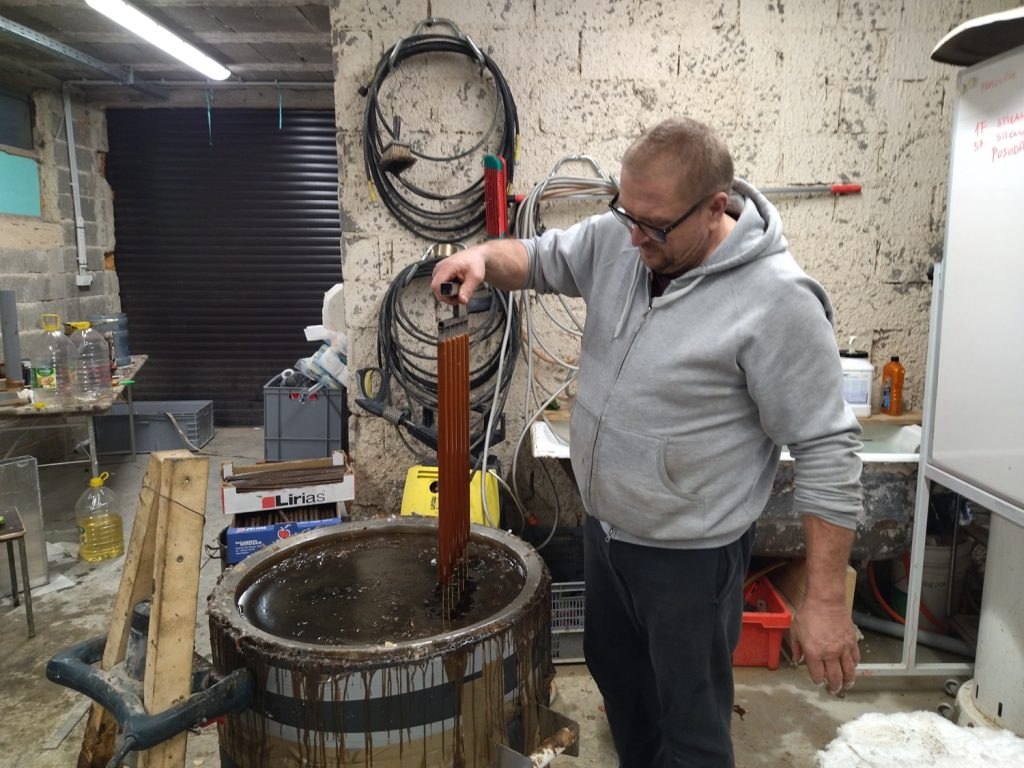
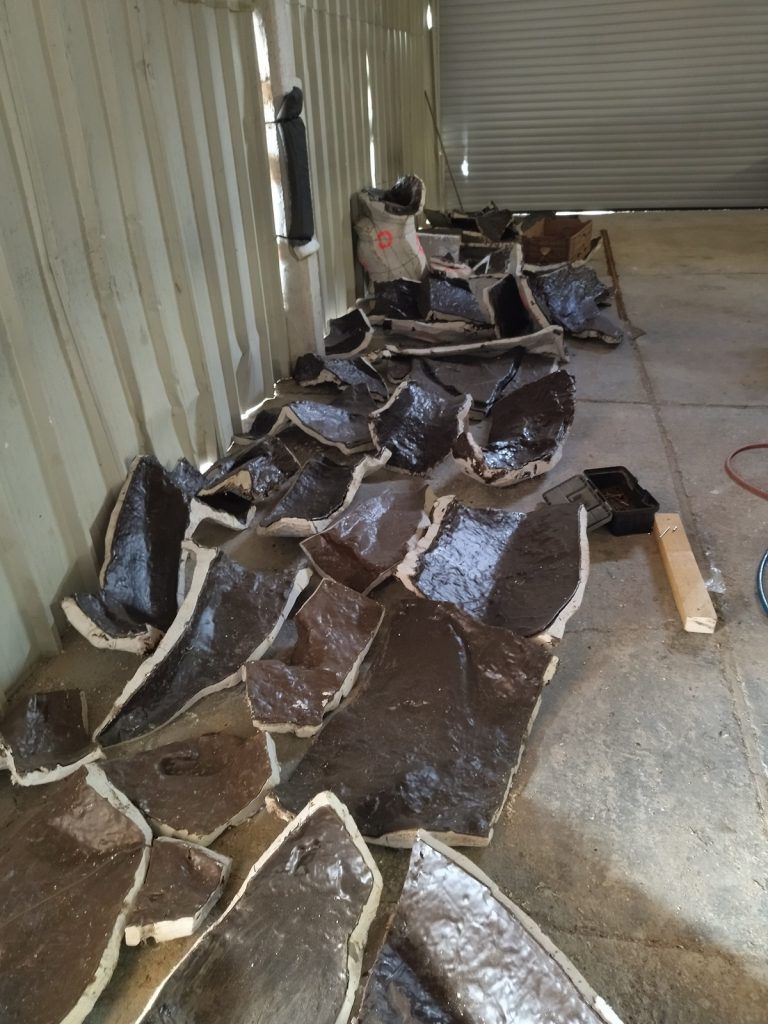
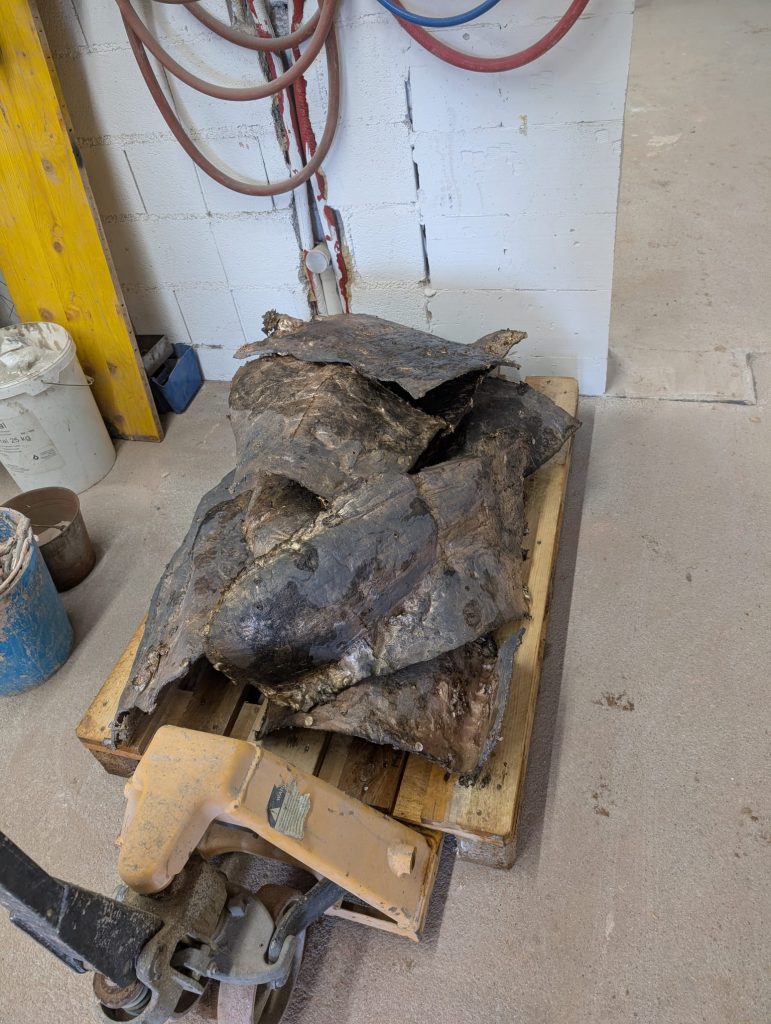
The clay model of The Sower was completed in May 2024. Under the leadership of Jurij Kamšek, Director of Livartis, the company’s workers produced the moulds in the studio before transporting them to the foundry, where the individual sections were cast in bronze.
Installation on the building is scheduled for the first half of 2026.
THE MAKING OF THE STATUE
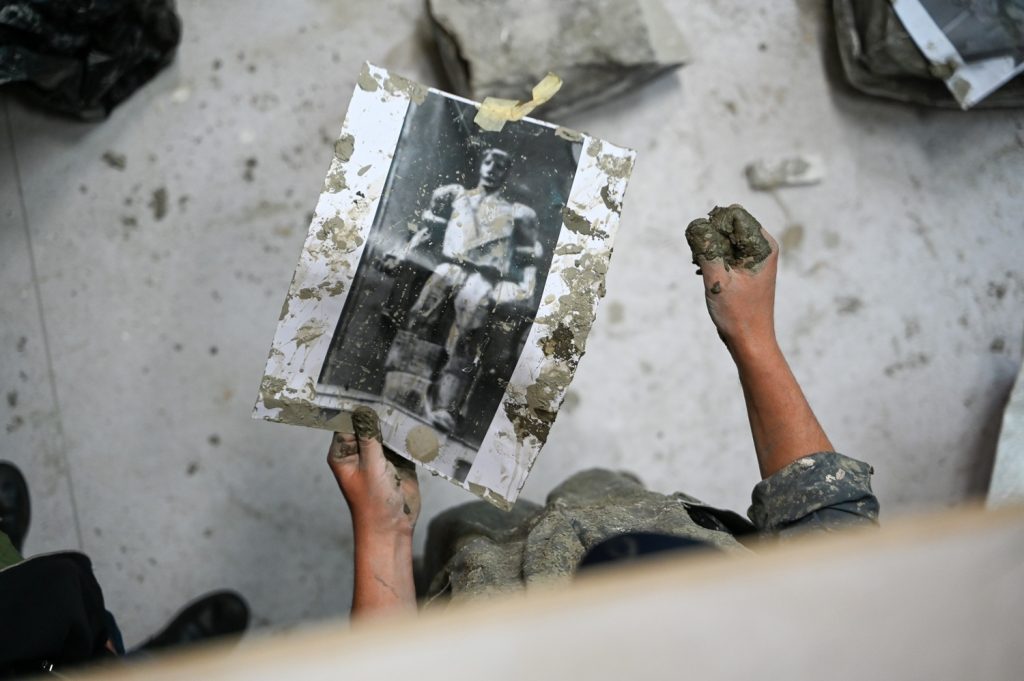
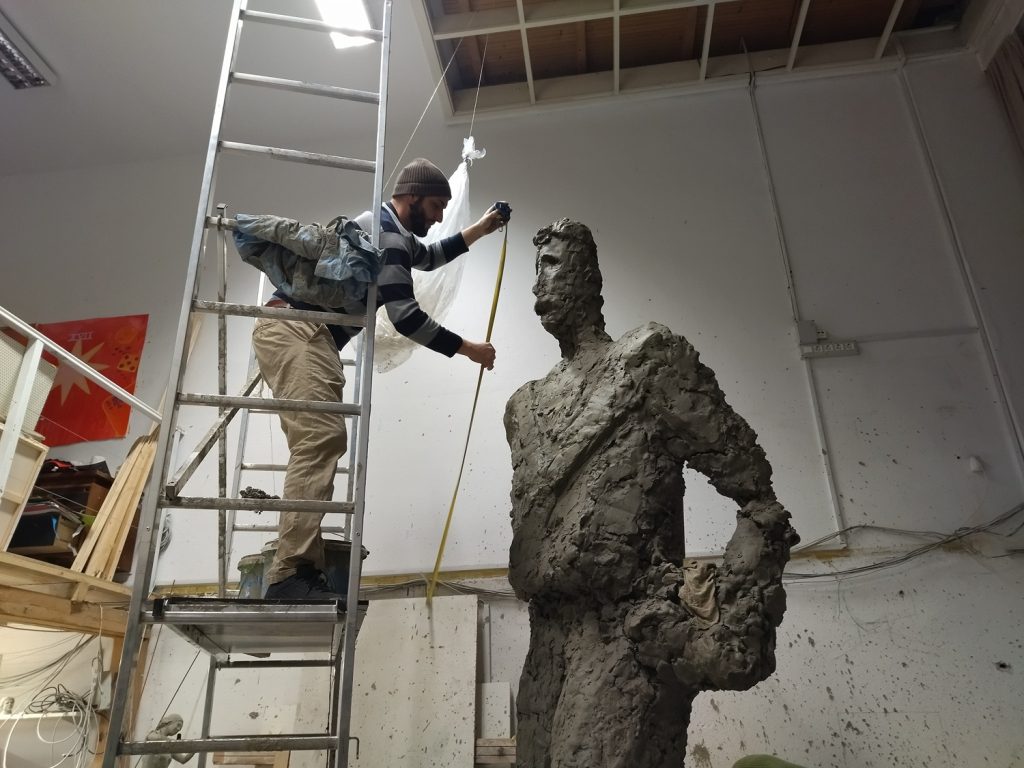
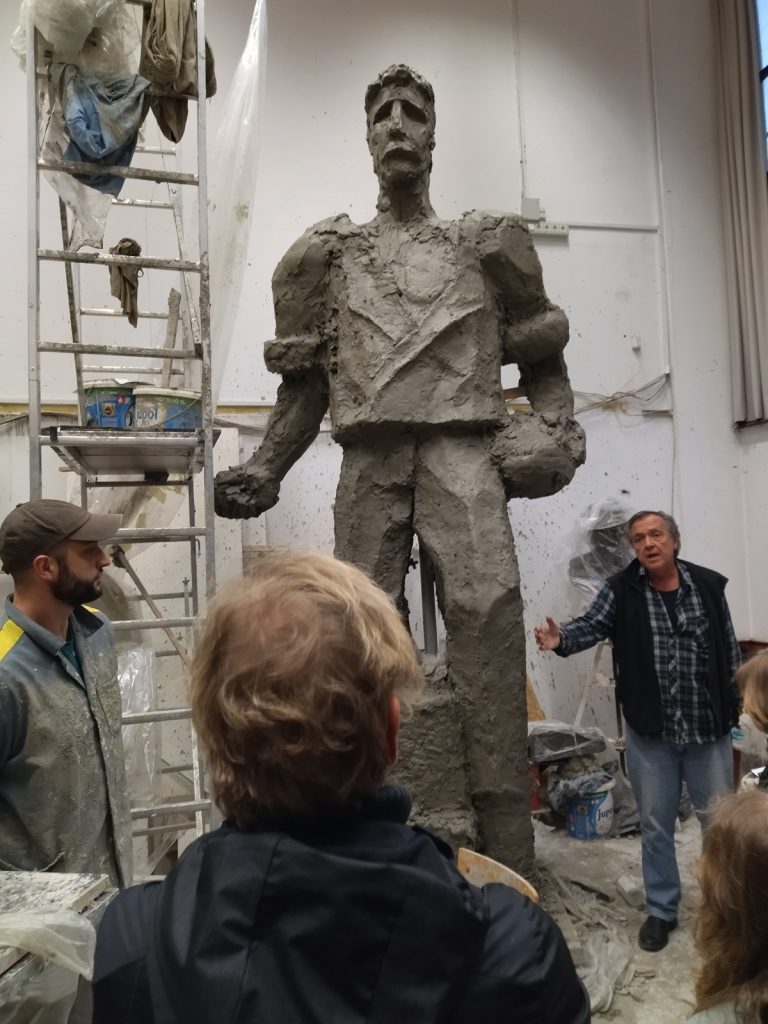
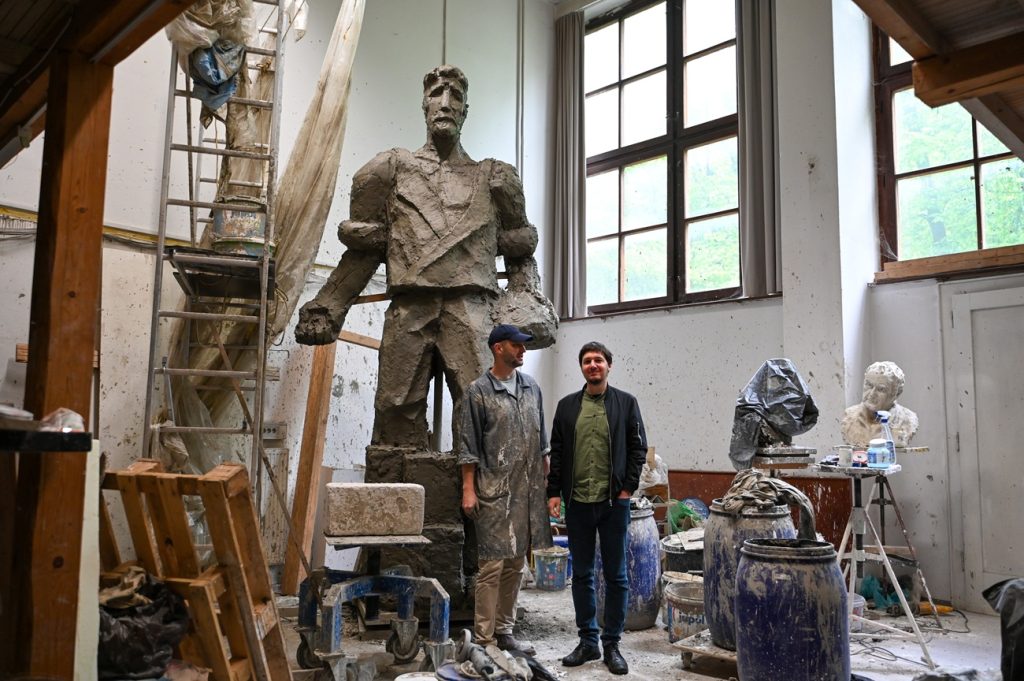
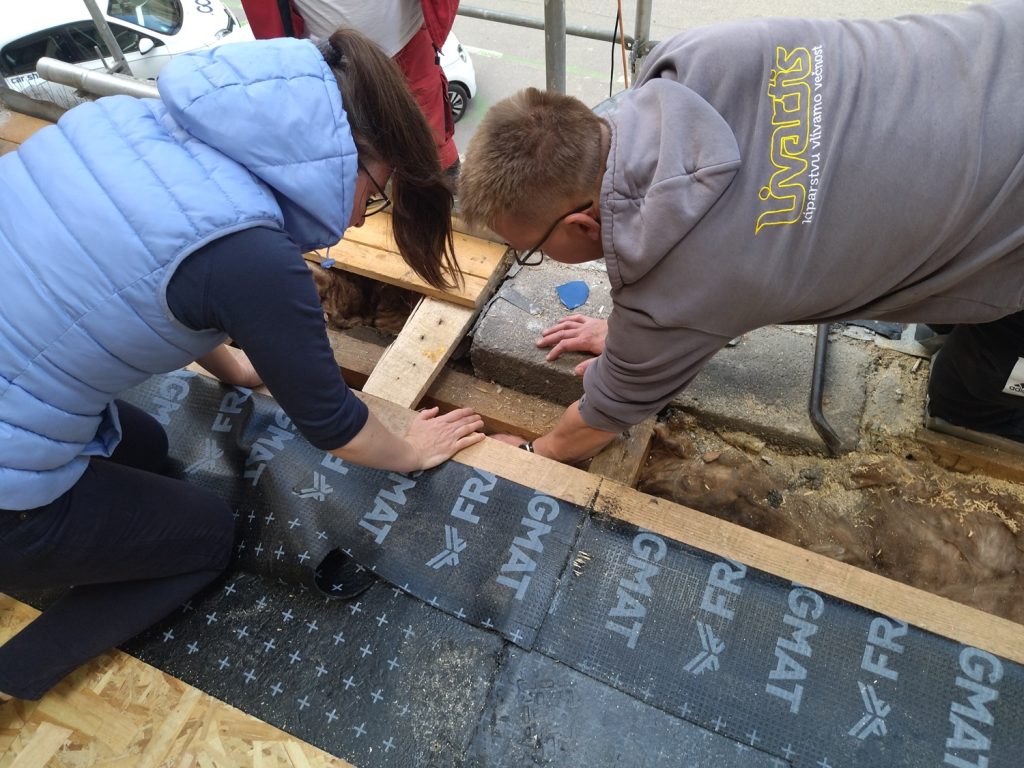
Initiative and project coordination: Vid Libnik
info@kipsejalec.si